

Once, when Hannah Richman was in elementary school in Raleigh, North Carolina, a confused friend went home and asked her parents whether it was possible to not have a dad. The parents said no, every baby comes from a mom and a dad. The friend came back to school and reported what they’d said. Hannah’s response was unwavering: “No, I promise it’s possible.”
Hannah, now 22, was born in 2003 to a single mom who had given herself a deadline: have a child by 35. Hannah grew up knowing the truth, but when she was little, she didn’t always have the words to explain it to others. Alongside the honesty, her mom instilled something else: a fierce sense of independence and autonomy. As she got older, curiosity crept in. “As I matured, I was like, I’m curious. How much of this part of me is from [the anonymous sperm donor], versus how much is from my mom?” Being donor conceived wasn’t something she thought of as part of her identity when she was young. It was just her life. It wasn’t until college that she started meeting other donor-conceived people and realizing just how many different experiences existed within that shared identity.
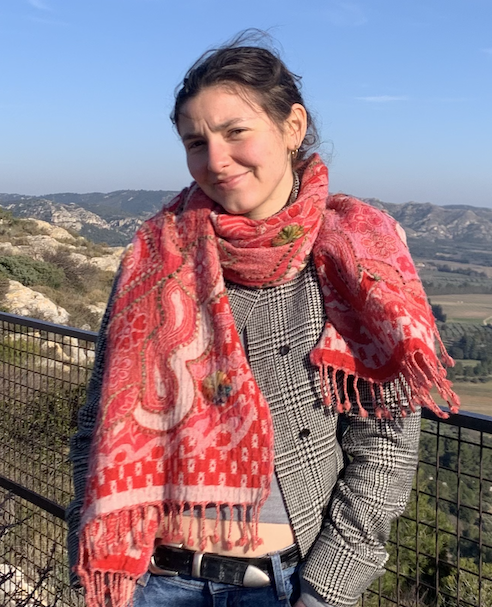
Hannah, a drama and communication major at UNC Chapel Hill, came to playwriting almost by accident. She’d originally imagined herself as an actor when she enrolled in a performance studies class her sophomore year, in which students were encouraged to draw on personal experience for a project. Her professor was struck by the perspective she was bringing to family building: not the single mom’s story, which has been told, but the donor-conceived child’s. That encouragement, combined with a story she couldn’t stop writing, kept her going. “It just all flowed out so naturally,” she says. Three years later, the play The Stranger in Me is her senior honors thesis, and this March she’s co-directing a full production with her professor. She graduates in May, with one clear dream for the play: to see it published and maybe one day produced in New York City.
Representation is about visibility and community: shining a light on experiences that often go unseen and making sure people know they aren’t alone.
The story follows Lily, a donor-conceived young woman who, at 15, becomes intensely focused on finding her biological father. She writes angry letters to her mom, furious, at first, that she was brought into the world this way. She searches for her father in her friends, her mentors, her teachers, anyone who might fill the void she’s convinced she has. She’s certain that finding him is the missing puzzle piece that will make her feel whole. By the end, she realizes the puzzle was never incomplete.
The play draws from Hannah’s own experiences, but Lily is more emotionally complex and more consumed by the search than Hannah ever has been. The scene where Lily freezes on a date with someone who dismisses her family, then replays the moment standing taller? That bad date happened to Hannah. There’s one moment she’s particularly nervous to see on stage: a monologue where Lily wishes she had a father to teach her things, to dance with her at her wedding. “That’s very vulnerable,” Hannah says, “because it’s true.”
At the heart of the play is a simple idea: you are more than your DNA. For Hannah, that’s not a consolation; it’s a rallying cry. She wants donor-conceived people and kids from solo parent families to see their origins as a source of strength. Her mom chose this path with intention and raised her with independence and confidence. That, Hannah says, is its own kind of inheritance. The play is her way of passing it on.
Follow @thestrangerinmeplay on Instagram to learn more about Hannah’s experience.
Parts of Me exists to expand authentic representation of donor-conceived people across arts, media, and culture.
- Browse our DCP Stories Collection to discover existing authentic donor conceived representation
- Meet Donor-Conceived Creators whose works are shifting narratives
- Access our Media Guidance if you’re creating or reporting on donor conception
- Learn about Creator Fellowships (launching Year 2)
