
Not long ago, six people discovered they were donor conceived half-siblings, scattered across the country. Without the shared history typical of groups of relatives, they had to find their own way to get to know each other. For this group of donor siblings, it started with questions. In the early months, there were round-robin emails. Someone would put forth a handful of icebreakers, and everyone would answer at their own pace. Years later, someone started sending more personal and granular questions to the group chat every Friday morning: “What’s the story of your first kiss?”, “Do you consider yourself a profane person? If so, what’s your favorite curse word?”, “What was your first concert?”. (That one resulted in the discovery that two of them had been at the same Reel Big Fish show in 2002.) The genetic link brought them together. The questions were how they forged a connection.
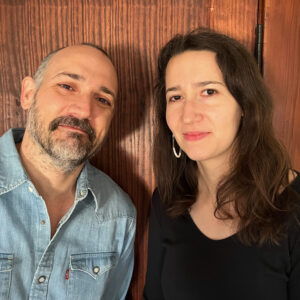
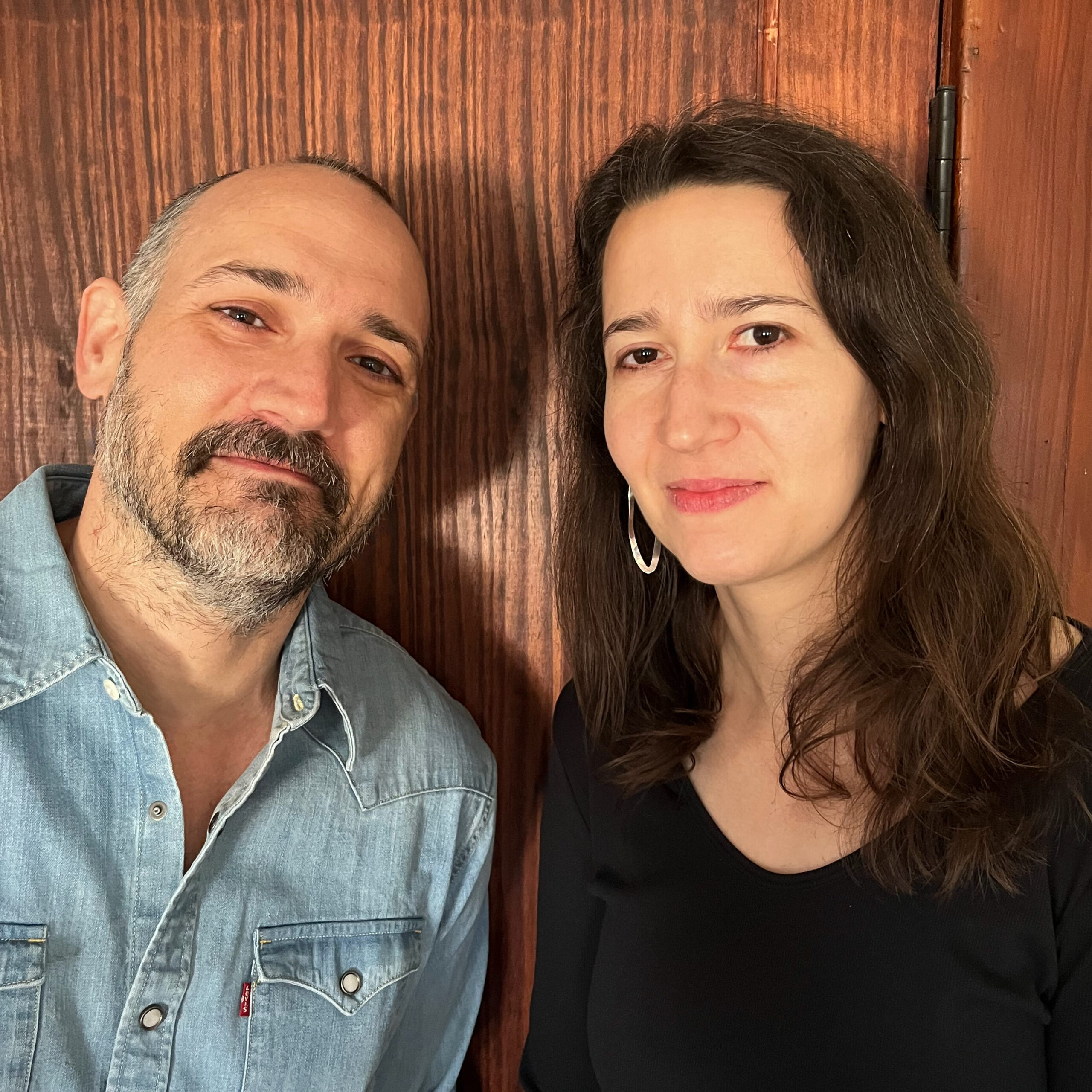
For Lanah Koelle and A.D. Burnett, the connection turned into something more.
Lanah Sings
Lanah is a jazz vocalist, while A.D., a filmmaker, cannot stand vocal jazz. This is the kind of thing that might go unspoken between people with a shared history. It’s an admission that’s too loaded, too close to a verdict on something the other person loves. But he eventually told her, and she wasn’t surprised. “Perhaps a little hurt, but not surprised,” she says.
He had just found a little sister, and as the older brother, he felt a certain duty. Her audience skewed older, and her repertoire was narrow. If he could nudge her toward music he actually liked, maybe he could come to enjoy watching her perform. Maybe he could help her. It was, as he puts it, his duty as her cooler big brother.
So he made her a Spotify playlist called “Lanah Sings” filled with songs almost entirely outside her jazz world — rock, pop, indie. It was music she’d never considered singing. Over 100 songs in total, assembled in multiple rounds. What came back to him in his inbox was not what he expected.
“Lord almighty, my sister could sing.”
It had started as a friendly challenge but turned into something closer to what Lanah calls a spin on the mixtape, the oldest way music lovers have ever said, “This is who I am.” A question, in the form of a song: What could you do with this? What does it sound like when it comes back through you?
“Songs have structure,” Lanah says, “and yet are flexible enough to accommodate variant expressions and interpretations. As a song passes from one artist’s voice to the next, it can mutate and become something unexpected and new, yet similar and related.” The same raw material, filtered through different lives.
No Surprises
Ten tracks accumulated into an album — Home Recordings (2026) — neither of them had set out to make. The recordings were made by Lanah alone in her living room, on her phone or computer, in continuous takes with no retakes for imperfection. She accompanied herself on an eclectic mix of instruments. The jazz world’s emphasis on virtuosity had always made her feel like her playing fell short. “What began as lo-fi necessity became an unexpected way of working through self-doubt,” she says.
One of the album’s tracks is a cover of Radiohead’s “No Surprises,” a song about being stuck in the loop of ordinary life — dreading the alarm that drags you into another day, longing for something to disrupt the numbness of routine. After receiving Lanah’s interpretation, A.D. wanted to make a music video, his visual interpretation of her version of the song he chose for her. A question, an answer, and then a response to the answer. The same source material, passed back and forth between two people, resulting in something neither could have made alone.
In the music video directed by A.D., Lanah moves somberly through an ordinary day, from sunup to sundown. She walks into the woods and buries herself in leaves, fingers gripping the soil, grounding in the earth — not away from the world but further into it. After the credits, she sits outside, a little dirty, face turned up into the rain, with the sound of children playing in the background. It is not the posture of someone dreading the start of another day. It is the posture of someone who woke up.
What They Made
Sibling relationships that begin in adulthood don’t come with shared infrastructure — no history, no accumulated closeness. Much of it has to be built deliberately. This is exactly what Lanah and A.D. did. The album and the music video are the most literal possible expression of that: objects that are also a bond. The making of it was the relationship forming.
As Lanah puts it, “Since we didn’t grow up in the same house, our home is a shared love of music and art. Our home is this record.”
Home Recordings is available now. Read our profiles of Lanah and A.D. in The Gallery.
Parts of Me exists to expand authentic representation of donor-conceived people across arts, media, and culture.
- Browse our DCP Stories Collection to discover existing authentic donor conceived representation
- Meet Donor-Conceived Creators whose works are shifting narratives
- Access our Media Guidance if you’re creating or reporting on donor conception
- Learn about Creator Fellowships (launching Year 2)
